


Play Nine: Golf Card Game
Bonfit
I picked up Play Nine: Golf Card Game expecting a light card game that would be easy to explain and quick to put down. That is exactly where it works best. It turns golf scoring into a compact card experience, so the goal is not simply to collect good cards but to finish with fewer points than the other players. The result feels more thoughtful than a purely luck-driven card game while remaining approachable enough for a family table.
Bonfit’s game is free to download, with optional in-app purchases ranging from $1.99 to $39.99 per item. It is rated for Everyone, runs on Android 8.0 or later, and has reached over 100 thousand installs. Its average rating sits at 4.5 from around 11 thousand ratings, which matches my impression: this is a focused, easygoing game with a clear audience rather than a large, complicated card platform.
How a normal round feels from the first deal
The best way to understand Play Nine is to play a few rounds without trying to optimize every decision. The golf theme gives the game its identity, but the important habit is learning to think in terms of your total score. A card that looks attractive on its own may be a poor choice if it leaves an awkward combination elsewhere in your layout.
My usual opening routine is simple. I first look for the cards that are likely to determine the shape of the round, then I decide which parts of the layout deserve attention. Instead of reacting to every draw, I try to identify one or two positions that can improve and leave the rest alone. This prevents the common beginner mistake of constantly replacing cards without a clear reason.
That restraint matters because every turn can create a new problem. A replacement may improve one position while making another card harder to use. The game rewards players who can separate a genuinely useful move from a move that merely feels active. When I play with friends, this is usually where the conversation becomes interesting: everyone understands the rules quickly, but people develop very different ideas about when to take a risk.
Related News






A typical everyday use case is a short evening game after dinner. One person can explain the basic objective in a minute, and nobody needs to study a long rulebook before joining. The pace also makes it suitable for a family visit or a casual break, especially when the group wants something more engaging than endlessly scrolling on a phone.
At the same time, I would not describe it as a replacement for a full tabletop golf game or a deep competitive card battler. Play Nine is built around short decisions and repeated rounds. If you want a campaign, a large collection system, elaborate deck construction, or a story mode, this will feel deliberately small. Its strength is that it gets to the decision-making quickly.
The habit that improves early decisions
I found it useful to treat the opening as an information-gathering phase. Rather than chasing the first obviously favorable card, I watch how the available choices develop and keep track of which positions are still flexible. This approach is especially helpful when playing against people who make quick moves, because it gives me a plan instead of forcing me to imitate their pace.
Gallery
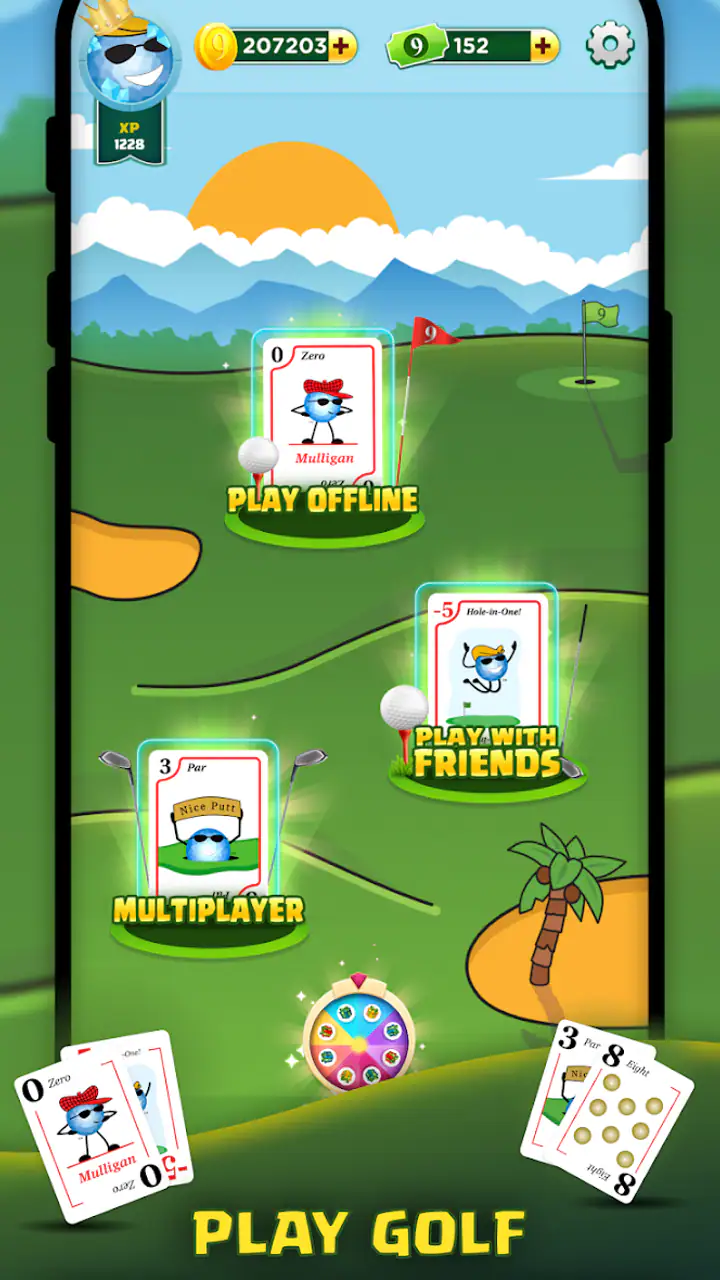
Another practical habit is to remember that a low-value card is not automatically valuable in every position. Its usefulness depends on what it can be paired with and whether holding it blocks a better opportunity. New players often focus on the number printed on a single card; experienced players pay more attention to the relationship between cards.
I also recommend agreeing on a relaxed pace before starting with children or first-time players. The game is easy to learn, but the reasoning behind a good move takes longer to develop. Letting new players ask why a move worked makes the first session more enjoyable than rushing through several rounds.
Small settings and setup choices worth checking
Play Nine is not a game where a long settings tour unlocks a completely different experience. That is part of its appeal. Still, I make a point of checking the available presentation and play options before settling into regular sessions. On a phone, small interface choices can affect how comfortable it is to inspect cards, follow the current round, and avoid tapping too quickly.
My advice is to play one practice round while paying attention to the layout rather than the result. Check whether the cards are easy to distinguish on your screen, whether the turn information is obvious, and whether the controls feel comfortable with one hand. These details matter more than they sound, particularly on a smaller display or when several people are passing a device around.
It is also worth deciding how you want to use purchases before you begin. The game is free, but optional items cost between $1.99 and $39.99 each. I would treat those purchases as extras rather than as a reason to start playing. For a casual group, the free starting experience is the sensible way to judge whether the game fits your household before spending anything.
The Everyone age rating makes it a natural candidate for mixed-age play, but age suitability does not mean every child will enjoy the same level of planning. Younger players may prefer the visual act of drawing and replacing cards, while older players may become interested in the scoring trade-offs. I would introduce it as a shared game first, then let each player decide how seriously to approach the strategy.
On Android, the minimum requirement is version 8.0. That makes it accessible on many older devices, although the actual comfort of play still depends on screen size and responsiveness. A game with simple rules can be frustrating if the cards are cramped or a touch lands in the wrong place, so I would test it on the device that will actually be used for group sessions rather than assuming every phone will feel identical.
A practical setup for family and friends
For a family session, I keep the first round deliberately conversational. I explain the scoring goal, allow players to inspect their choices, and avoid correcting every move. After that first round, I introduce one useful question: “What are you trying to improve?” It encourages players to think about a turn before acting without making the game feel like a lesson.
For a more competitive group, I prefer a repeatable routine. Everyone takes a moment to inspect the layout, identifies a target position, and then makes the move without unnecessary hesitation. This creates a fairer rhythm than allowing one player to analyze indefinitely while others wait. The game remains casual, but the decisions become easier to compare.
When playing alone with a device nearby, I use the same approach. I do not restart simply because an early draw is disappointing. Continuing with an imperfect position teaches more about recovery than replaying until the opening looks favorable. That is one of the simplest ways to turn a light card game into a useful exercise in adapting to limited information.
Faster patterns that do not sacrifice good judgment
Once the basic workflow becomes familiar, the main improvement is speed of recognition. I no longer inspect every card with the same intensity. I look first for obvious opportunities, then for positions where a move could create a larger improvement, and finally for choices that are unlikely to change the overall result. This ordering keeps turns moving without making them careless.
One pattern I watch for is the “false improvement”: a move that lowers one visible value but leaves the layout less flexible. It can feel satisfying because the immediate number looks better, yet the next turn may offer fewer useful routes. I have learned to ask whether the move improves the position as a whole, not just the card I am touching.
A second pattern is the temptation to chase a perfect-looking arrangement. That can be worthwhile when the opportunity is clear, but it becomes a trap when the pursuit requires several uncertain turns. I usually accept a solid improvement when the alternative depends on a narrow sequence. The right choice changes with the score situation, but the general lesson is consistent: do not confuse elegance with efficiency.
A third pattern involves observing opponents without copying them. Their discarded choices can reveal what they are avoiding, but they can also be misleading. A card that is poor for one layout may be exactly what another player needs. I use other players’ moves as clues, not instructions. This is particularly important in family games, where players may follow very different strategies.
For faster play, I recommend a three-question turn check:
- Which position can improve most?
- Does this move make the remaining layout harder to manage?
- Am I choosing it because it is strong, or simply because it is available now?
These questions are quick enough for a casual round and useful enough to prevent random tapping. They also help new players understand why an experienced player sometimes refuses an apparently attractive card.
The game is at its most enjoyable when speed comes from familiarity rather than pressure. I would not encourage players to rush children or newcomers just to make rounds shorter. Instead, let the repeated structure teach recognition naturally. After several sessions, the same decisions that once required discussion become almost automatic.
When the casual format becomes genuinely strategic
Play Nine is more strategic than its friendly presentation suggests, but its strategy has a ceiling. The available information is limited, and luck still affects which choices appear. That means a careful player can improve their decisions without controlling every outcome. I like that balance for social play because a skilled person can be rewarded without making everyone else feel irrelevant.
The most interesting trade-off is between immediate safety and future potential. A safe move protects the current position, while a riskier move may produce a larger gain if the next opportunity appears. I make that choice based on how much room I have left to recover. Early in a round, I am more willing to preserve flexibility; later, I prefer a dependable improvement unless the score demands a gamble.
Another useful distinction is between playing for your own layout and playing to deny an opponent. The second approach can be tempting, but it is not always efficient. If focusing on another player causes me to neglect my own score, I have probably overreacted. I only consider opponent-aware decisions when the available information is strong enough to justify the distraction.
Where the game reaches its limits
The same simplicity that makes Play Nine welcoming can limit its appeal over time. Players who want a large variety of card types, elaborate progression, or a constantly changing challenge may eventually find the core loop repetitive. The game offers a compact format, not an endless strategic universe.
It is also not ideal for people who dislike luck influencing a competitive result. Careful play improves the quality of your decisions, but it cannot guarantee a win every round. I see that as a positive in a family setting, yet serious players looking for a tightly controlled contest may prefer a game with more information and fewer random swings.
The phone format introduces another limitation. A physical card game naturally creates a shared table, while a mobile game can make social interaction feel slightly less direct if everyone is focused on one screen. Passing a device works for a small group, but it is not as comfortable as having a dedicated physical layout in front of each player. If your priority is face-to-face table presence, a traditional alternative may serve you better.
I would also skip it if you are searching for a solo game with a rich long-term progression system. Play Nine can fill short gaps and provide repeatable rounds, but its appeal comes from the decisions within each session rather than from building a persistent character, collection, or campaign.
On the other hand, it is a strong choice for someone who wants a low-commitment card game that can be learned quickly and revisited often. The free entry point makes it easy to test with friends, while the Everyone rating supports a broad household audience. The current version is 5.13, and the game’s established presence is reflected in around 926 written reviews, but I judge it mainly by how well its central loop holds up after the novelty fades.
Who should install it, and who should look elsewhere?
I would recommend it to families, casual card players, and friends who enjoy light competition without a long setup. It is especially suitable for people who like making small tactical choices and seeing the result within a short session. Someone new to mobile card games can understand the basic purpose quickly, then gradually learn the more subtle value of preserving flexible positions.
I would be more cautious recommending it to players who need constant novelty. If you expect new modes, deep customization, or a strong solo progression path, this focused design may feel narrow. Likewise, players who prefer games with no optional spending at all should review the purchase choices carefully before handing the phone to a child.
Compared with ordinary solitaire, Play Nine is more social and competitive because the objective is tied to other players’ scores. Compared with a traditional trick-taking game, it asks less about reading a fixed sequence of plays and more about managing your own layout. Compared with a full golf simulation, it removes the physical skill and course detail, replacing them with quick card decisions. Those differences explain its place in the category: it is not trying to imitate every kind of golf or every kind of card game.
My verdict after settling into the rhythm
After playing it as both a relaxed family activity and a more deliberate card game, I think Play Nine: Golf Card Game succeeds because it keeps its promise small. It gives me a recognizable objective, enough uncertainty to make each round interesting, and rules that do not get in the way of conversation. The best sessions are not about studying a complicated system; they are about noticing one better choice than the obvious one.
My strongest recommendation is to approach it with repeatable habits rather than chasing perfect results. Inspect the layout before acting, decide which position deserves attention, and avoid making a move simply because it is available. Those habits make the game faster and more satisfying without turning a casual round into homework.
There are clear boundaries. The loop may become familiar, the mobile screen is not as natural as a physical table, and the optional purchases mean I would keep spending decisions separate from the enjoyment of the basic game. Players seeking deep progression should choose another type of card experience.
For everyone else, this is a pleasant free starting point from Bonfit that fits short sessions and mixed groups. I would install it for a family evening, a quick game with friends, or a few thoughtful rounds when I want something more engaging than a basic time-killer. The real strength is its balance between easy rules and decisions that reward patience, making it a good casual card game as long as you are comfortable with a focused format rather than an expansive one.
FAQs for Play Nine: Golf Card Game
What is Play Nine: Golf Card Game?
Play Nine: Golf Card Game is a casual card game inspired by the scoring system of golf. The objective is to finish with the lowest score after nine holes, represented by nine rounds. Players draw, swap, and reveal cards while trying to replace high-value cards with lower ones. Its simple rules make it approachable, but memory, timing, and risk management add meaningful strategy.
How do you play Play Nine: Golf Card Game?
Each player builds a layout of cards and takes turns drawing from the deck or discard pile. You can use the drawn card to replace one in your layout, usually trying to reduce your total score. Some cards may offer special actions or tactical advantages, depending on the version and rules in the app. At the end of a round, scores are calculated, and the lowest overall score wins.
Can Play Nine: Golf Card Game be played with friends or family?
Yes, the game is designed for multiplayer sessions and works well with friends or family because the basic rules are quick to understand. It is especially suitable for casual gatherings where players want a game that is more strategic than a simple card-matching title but less demanding than a complex board game. Check the current app version for available local, online, or computer-player options.
Is Play Nine: Golf Card Game free to download and does it contain ads?
The availability, price, advertisements, and optional purchases can vary between the Android and iOS versions, as well as by region and app update. Before downloading, review the store listing for the latest information about in-app purchases, advertising, and any premium features. If you prefer uninterrupted play, check whether the app offers an ad-free upgrade or other paid option.
Does Play Nine: Golf Card Game require an internet connection?
An internet connection may be required for downloading the game, receiving updates, displaying advertisements, syncing progress, or using online multiplayer features. However, some versions may allow offline play against computer opponents or in local sessions. Since functionality can change with updates, it is best to test the game in airplane mode after installation if offline access is important to you.
Pros
- Quick rounds are ideal for short breaks or casual multiplayer sessions.
- Simple rules make it accessible for players unfamiliar with golf or card games.
- The score-based format adds strategy beyond simply matching cards.
- Games can be replayed frequently without requiring a large time commitment.
- Lightweight gameplay is suitable for older or less powerful mobile devices.
Cons
- Random card draws can sometimes outweigh careful planning.
- The gameplay may feel repetitive after extended sessions.
- Limited depth may disappoint experienced strategy or card-game players.
- Multiplayer enjoyment depends on finding active opponents.
- Some features or content may require in-app purchases or ads.


